
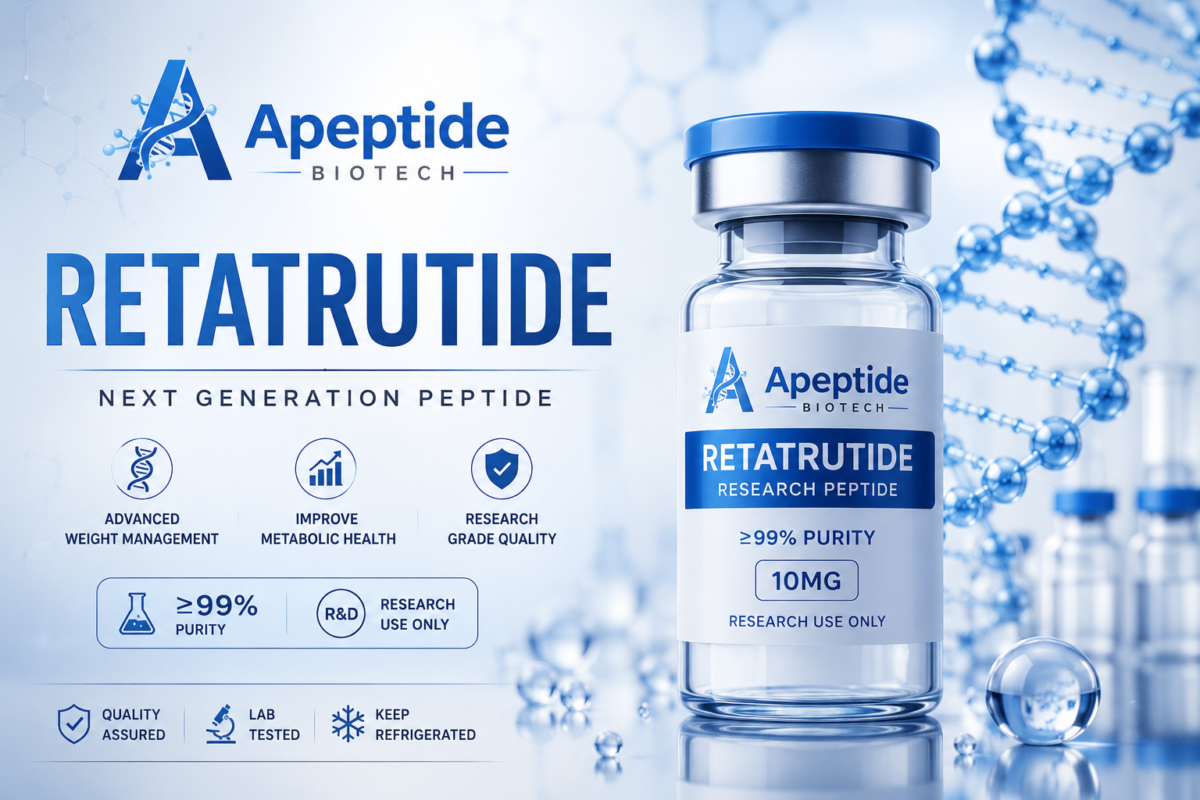
Retatrutide: Benefits, Research, Dosage Information & Where to Buy
Retatrutide is a research peptide studied for its role as a triple hormone receptor agonist. It is commonly discussed in metabolic research because it targets GLP-1, GIP, and glucagon receptor pathways. This guide explains what retatrutide is, how it works, its research benefits, dosage considerations, side effects, and how it compares with related peptides such as Semaglutide, Tirzepatide, and Cagrilintide.
What Is Retatrutide?
Retatrutide is an investigational research peptide studied for metabolic and body composition pathways. It is often described as a triple agonist because it activates three receptor systems: GLP-1, GIP, and glucagon.
This makes retatrutide different from Semaglutide, which is mainly associated with GLP-1 research, and Tirzepatide, which is commonly discussed as a GIP and GLP-1 dual agonist.
Retatrutide is not presented here as a treatment or medical product. This page is for research education only.
How Does Retatrutide Work?
Retatrutide is studied for its interaction with three important metabolic receptor pathways:
- GLP-1: studied for appetite, satiety, and glucose-related signaling.
- GIP: researched for metabolic response and insulin-related pathways.
- Glucagon: studied for energy balance and metabolic activity.
Because of this triple pathway profile, researchers often compare retatrutide with other metabolic peptides, including Tirzepatide peptide, Semaglutide peptide, and Cagrilintide peptide.
Benefits of Retatrutide in Research
Metabolic Research Interest
Retatrutide is mainly studied in metabolic research. Researchers are interested in how multi-receptor peptide activity may influence appetite signaling, energy balance, and body composition models.
Body Composition Research
Retatrutide research has gained attention because of studies involving body weight and metabolic outcomes. It is often discussed alongside GLP-1 and incretin-related peptides.
Comparison With Other Weight Management Peptides
Retatrutide is frequently compared with Tirzepatide, Semaglutide, and Cagrilintide because each compound is linked to different metabolic pathway research.
Research and Clinical Studies on Retatrutide
Published research has examined retatrutide as a triple hormone receptor agonist in adults with obesity. In a phase 2 study published in the New England Journal of Medicine and indexed on PubMed, retatrutide was associated with substantial reductions in body weight after 48 weeks in the study population.
Researchers can explore more information through these scientific databases:
For broader peptide education, visit the Apeptide Biotech blog or browse our research peptide category.
Retatrutide Dosage Information
Searches for retatrutide dosage, retatrutide dose, and retatrutide dosage schedule are common. However, dosage depends on the research protocol, compound concentration, and study design.
This page does not provide human dosing instructions. Retatrutide is discussed here strictly for research education.
Retatrutide Starting Dose Research
In research settings, starting dose information is based on study design and trial protocol. Researchers should rely on published clinical literature, not informal online dosage charts.
Retatrutide Dosage Compared With Tirzepatide
Researchers often compare retatrutide dosage information with Tirzepatide research because both compounds are linked to incretin pathway studies.
Potential Side Effects of Retatrutide
Retatrutide side effects are mainly discussed in clinical and research settings. Reported concerns in metabolic peptide studies often include gastrointestinal-related observations such as nausea, vomiting, diarrhea, and appetite changes.
Because retatrutide remains an investigational compound, researchers should review published data carefully before designing studies.
Retatrutide vs Related Peptides
Retatrutide vs Semaglutide
Semaglutide is commonly studied as a GLP-1 receptor agonist. Retatrutide is different because it is researched as a triple agonist involving GLP-1, GIP, and glucagon pathways.
Retatrutide vs Tirzepatide
Tirzepatide is usually discussed as a dual GIP/GLP-1 compound. Retatrutide adds glucagon receptor activity, making it a different type of research peptide.
Retatrutide vs Cagrilintide
Cagrilintide is studied as an amylin analogue. Retatrutide is studied through incretin and glucagon-related receptor pathways. Both appear in metabolic peptide research, but they are not the same.
Retatrutide vs AOD-9604
AOD-9604 is commonly discussed in fat metabolism peptide research, while retatrutide is studied through multi-receptor metabolic pathways.
Where to Buy Retatrutide
Researchers looking to buy retatrutide should focus on purity, secure packaging, reliable sourcing, and clear research-use labeling.
You can explore available research peptides through the Apeptide Biotech shop. For related metabolic peptide information, visit our pages on Semaglutide, Tirzepatide, and Cagrilintide.
Frequently Asked Questions About Retatrutide
What is retatrutide?
Retatrutide is an investigational research peptide studied as a triple hormone receptor agonist targeting GLP-1, GIP, and glucagon pathways.
Is retatrutide the same as tirzepatide?
No. Tirzepatide is commonly discussed as a dual GIP/GLP-1 compound, while retatrutide is studied as a triple agonist.
Is retatrutide the same as semaglutide?
No. Semaglutide is mainly associated with GLP-1 receptor research. Retatrutide is studied across GLP-1, GIP, and glucagon receptor pathways.
What are retatrutide benefits?
Retatrutide benefits are discussed in research areas involving metabolic signaling, appetite-related pathways, and body composition studies.
What are retatrutide side effects?
Research discussions often mention gastrointestinal observations such as nausea, vomiting, diarrhea, and appetite changes.
What is retatrutide dosage?
Retatrutide dosage depends on study design and research protocol. This page does not provide human dosing instructions.
Where can I buy retatrutide?
You can explore research peptides through the Apeptide Biotech shop.
What category is retatrutide?
Retatrutide belongs to metabolic research peptides, incretin research peptides, and GLP-1/GIP/glucagon receptor agonist research compounds.
Conclusion
Retatrutide is one of the most discussed metabolic research peptides because of its triple receptor activity involving GLP-1, GIP, and glucagon pathways. It is frequently compared with Semaglutide, Tirzepatide, Cagrilintide, and other weight management research peptides.
For researchers building knowledge around retatrutide, the best approach is to study published literature, compare related peptide pathways, and source research compounds from trusted suppliers.
Explore more research peptides at the Apeptide Biotech shop.